LVP or Hardwood: How We Talk Through Flooring With Our Buyers
Flooring is one of the first selections people get emotional about, and one of the last ones they should rush.
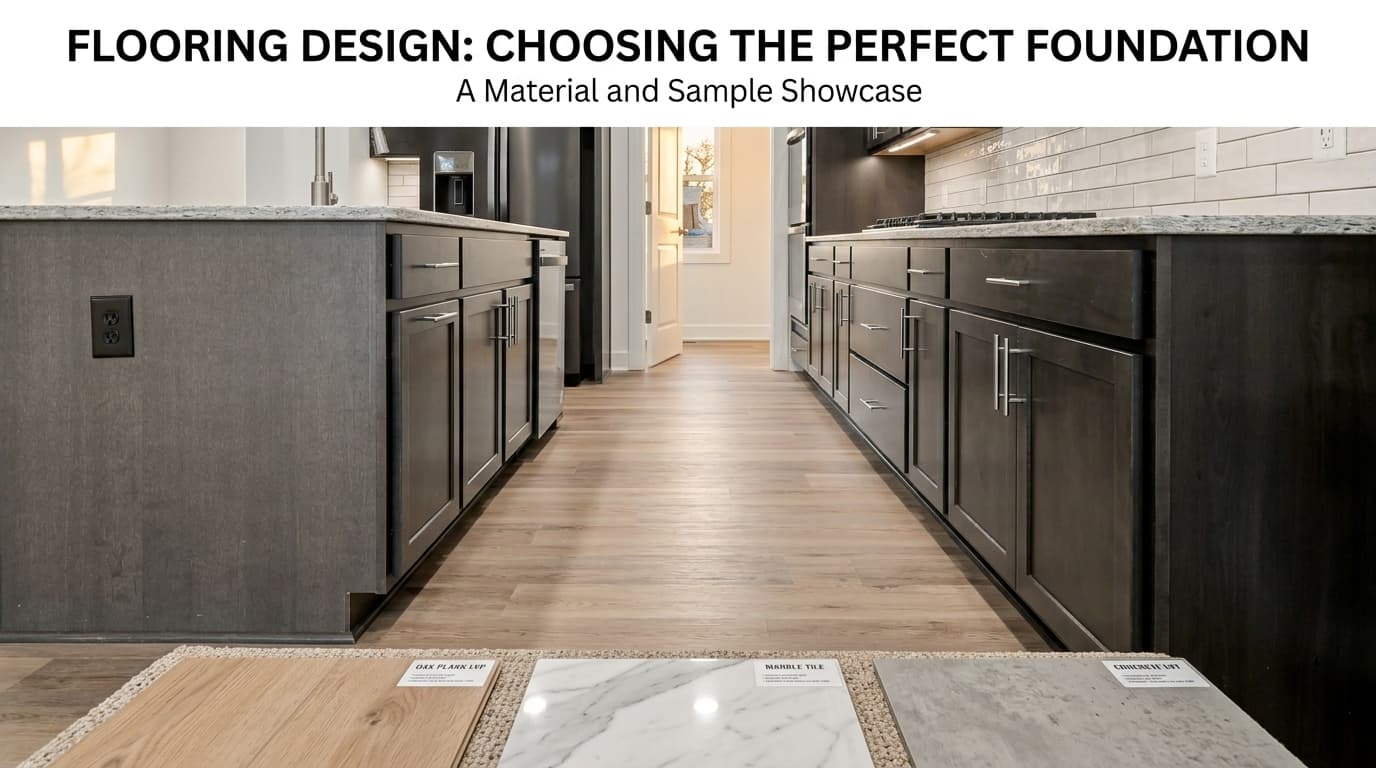
Flooring is one of the first selections people get emotional about, and one of the last ones they should rush. It touches every room, it's the thing your kids will drag a chair across for the next fifteen years, and it's expensive to change your mind about later.
We build across Prince William, Fauquier, Culpeper, Orange and Madison counties, and we've installed both luxury vinyl plank and site-finished or engineered hardwood in a lot of houses since 1997. Neither one is the right answer for everybody. Here's how we help families sort it out.
What LVP actually is
Luxury vinyl plank is a multi-layer product — a rigid or flexible core, a printed image layer that looks like wood, and a clear wear layer on top that takes the abuse. It clicks or glues together, it goes down fast, and the good stuff looks convincingly like white oak from standing height.
The thing that sold most builders on it isn't looks. It's water. LVP doesn't swell, cup or stain when a dishwasher line lets go or a golden retriever comes in soaked from a February rain. That single property changed how we think about kitchens, mudrooms, laundry rooms and basements.
Where hardwood still earns its keep
Real wood has depth. Light moves across it differently across the day, and the grain isn't repeating — with LVP, if you look hard enough in a big open room, you'll eventually find the same plank pattern twice. Some people never notice. Some people notice on day one and can't unsee it.
Hardwood also has a second life. A solid or thick-veneer engineered floor can be sanded and refinished. If you scratch it up over a decade with dogs and furniture, you can bring it back, or change the stain color entirely when your taste moves on. LVP can't be refinished. When the wear layer is gone, the plank is gone.
And there's the feel underfoot. Wood is denser and quieter in a way that's hard to describe until you walk both. If you're the kind of person who has opinions about the sound a room makes, you probably already know which way you lean.
The questions we ask before we recommend either one
Who lives here? Two adults who take their shoes off at the door is a different house than three kids under ten, a dog, and a gravel driveway. Grit is what actually kills a floor — not water, not furniture. Sand tracked in from a country road works like a belt sander over years.
Where are you building? A lot of our homesites in the Piedmont are on well and septic, on rolling ground, with real seasonal humidity swings. Wood moves with humidity. That's manageable — it's why we acclimate material on site before install and why the HVAC needs to be running — but it's a factor. LVP is largely indifferent to it.
Is there a basement or a walkout? Below grade, we're going to steer you toward LVP nearly every time. Moisture vapor comes up through a slab whether you can see it or not, and wood below grade is asking for a problem.
How long do you plan to stay? Families building a house they intend to hand down think differently than families building a ten-year house. Refinishability matters more the longer the horizon.
What's the whole budget doing? This is the honest one. Flooring competes with cabinetry, trim detail, site work and the septic system. We've had buyers put LVP throughout the main level and move the savings into a bigger kitchen island, better windows, or a screened porch they actually use. That's a legitimate trade, not a compromise.
You don't have to pick just one
Most of the houses we build now use both. Hardwood in the foyer, dining room and formal spaces where people's eyes go first. LVP in the kitchen, mudroom, laundry and basement where water lives. Carpet in bedrooms if you want soft feet in the morning, or continuing the hard surface through if you don't.
The one thing to be careful about is transitions. In an open plan, a flooring change in the middle of a sightline reads as a mistake unless it lands on a real architectural break — a cased opening, a step, a wall. When we lay out a home like The Appomattox or The Arlington, we'll walk the plan with you and mark where a material change looks intentional and where it looks accidental.
In a smaller, tighter footprint — something like The Madison or The St Albans in our Cottage series — running one continuous floor across the whole main level usually makes the house feel bigger. Fewer visual breaks, more apparent square footage. That's a case where LVP throughout is both practical and the better-looking choice.
A few practical notes from the field
Wear layer thickness matters more than brand name or price tier. If you're comparing two LVP products, ask about the wear layer before you ask about anything else.
Underlayment and subfloor prep matter enormously with LVP. It's a thin, flexible product, and it telegraphs what's underneath it. A floor that feels cheap usually isn't the plank's fault.
Wide planks look current but show subfloor irregularity more than narrow ones. Worth knowing before you fall in love with a nine-inch board.
Sample chips lie. Get a full plank, put it on the floor of the room it's going in, and look at it in morning light and evening light. Colors that look warm under showroom fluorescents can go pink or gray in a room with north-facing windows.
Bring your dog's nails into the conversation. Seriously. Scratch resistance is where these two products differ most in daily life, and no amount of showroom talk substitutes for asking a neighbor with a similar dog how their floor held up.
If you want to see how these choices read in finished houses, our gallery is the fastest way to get a feel for it, and you can browse the full range of floor plans to see which layouts have the long open sightlines where flooring decisions carry the most weight.